WordPress on DigitalOcean

Author: headless_sync

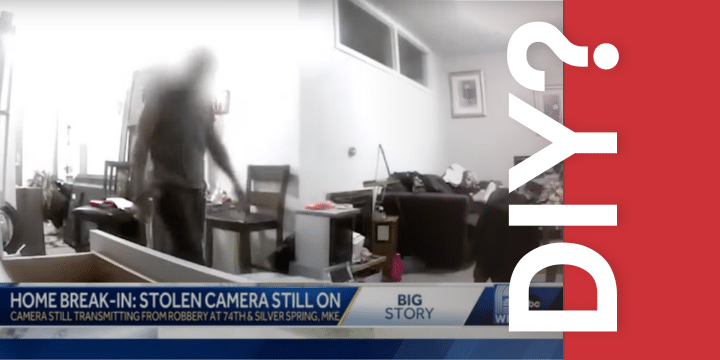
  • DIY vs. Monitored Security: Why Real Protection Needs Real People

    DIY vs. Monitored Security: Why Real Protection Needs Real People

    Security technology has become more accessible than ever. With DIY alarm kits, smart cameras, and app-based monitoring available online, many property owners assume they can manage their own protection. While these systems offer convenience, they also place the full responsibility for emergency response on the user.

    When it comes to real safety, technology alone is not enough. Professional monitoring provides human oversight, rapid response, and reliable protection that DIY systems simply cannot match.

    What DIY Security Systems Offer

    These systems notify users when something happens, but the user must decide what to do next. That means answering alerts, checking video feeds, contacting emergency services, and managing false alarms.

    For some people, this may seem sufficient. However, emergencies rarely happen at convenient times.

    The Problem With Self Monitoring

    DIY systems rely on one critical assumption: that you are always available and able to respond.

    In reality:

    • You may be asleep
    • Your phone may be off
    • You may be in a meeting
    • You may be travelling
    • You may be dealing with the emergency itself

    When alerts are missed or delayed, response time increases. In a fire, carbon monoxide incident, or break-in, even a few minutes can make a major difference.

    Self monitoring also creates stress. Property owners are forced to act as their own security operators, making fast decisions during high-pressure situations.

    What Professional Monitoring Provides

    Professionally monitored systems connect your security equipment to a 24/7 monitoring centre staffed by trained operators.

    When an alarm is triggered:

    • The signal is received instantly
    • The event is verified
    • Emergency services are dispatched
    • Key contacts are notified
    • The incident is documented

    This happens whether you are home, away, asleep, or unreachable.

    Professional monitoring removes the burden of response from the property owner and ensures that action is taken immediately.

    Why Human Oversight Still Matters

    Modern security technology uses advanced sensors and AI analytics, but it cannot fully replace human judgement.

    Technology detects events. People manage outcomes. This combination delivers a level of protection that DIY systems cannot replicate.

    Fire and Carbon Monoxide Safety Require Immediate Action

    Smoke and carbon monoxide alarms are essential, but they only work if someone hears them and responds.

    With professional monitoring:

    • Fire alarms automatically notify emergency services
    • Carbon monoxide alerts trigger immediate response
    • Help is dispatched even if no one is home

    In Ontario, updated Fire Code requirements emphasize proper CO detection, but detection alone is not enough. Professional monitoring ensures that dangerous events are acted on quickly.

    DIY alarms that only beep provide limited protection if no one is present or able to respond.

    Commercial Properties Face Greater Responsibility

    For businesses, the stakes are even higher.

    Commercial property owners are responsible for:

    • Employee safety
    • Customer safety
    • Tenant protection
    • Fire Code compliance
    • Insurance requirements
    • Liability management

    A missed alert or delayed response can lead to:

    • Business interruption
    • Property damage
    • Legal exposure
    • Insurance complications
    • Reputational harm

    Professional monitoring provides the reliability and accountability that businesses need to manage these risks effectively.

    False Alarms and Emergency Resources

    DIY systems often generate false alarms due to pets, weather, dirt, or user error.

    Without professional verification, property owners may contact emergency services unnecessarily or ignore alerts altogether.

    Monitoring centres use verification processes such as video review or multi-sensor confirmation to reduce false dispatches. This protects both the property owner and emergency responders from unnecessary calls.

    Security Is Not Just About Devices

    Cameras, sensors, and alarms are tools. Real protection comes from what happens after they are triggered.

    Professional monitoring ensures:

    • Faster response
    • Better coordination
    • Reduced stress
    • Improved outcomes
    • Consistent oversight

    DIY systems stop at the alert. Monitored systems deliver action.

    Peace of Mind Has Real Value

    Security should provide confidence, not constant worry.

    With professional monitoring, property owners do not need to:

    • Check alerts constantly
    • Monitor cameras overnight
    • Make emergency decisions alone
    • Wonder if help is coming

    Knowing that trained professionals are always watching over your system provides peace of mind that DIY solutions cannot match.

    DIY security systems offer convenience, but convenience is not the same as protection.

    Real security requires real people. Professional monitoring ensures that when something goes wrong, trained operators respond immediately, coordinate emergency services, and protect what matters most.

    For Ontario homeowners and businesses, choosing monitored security is not just about technology. It is about accountability, reliability, and peace of mind.
  • Investing in Safety: How Windsor Businesses Can Access Up to $5,000 Through Project Green Light

    Investing in Safety: How Windsor Businesses Can Access Up to $5,000 Through Project Green Light

    Downtown safety is not just a municipal priority. It is a business priority. Through Project Green Light in Windsor, local businesses now have an opportunity to strengthen their security infrastructure while accessing up to $5,000 in available funding support. 

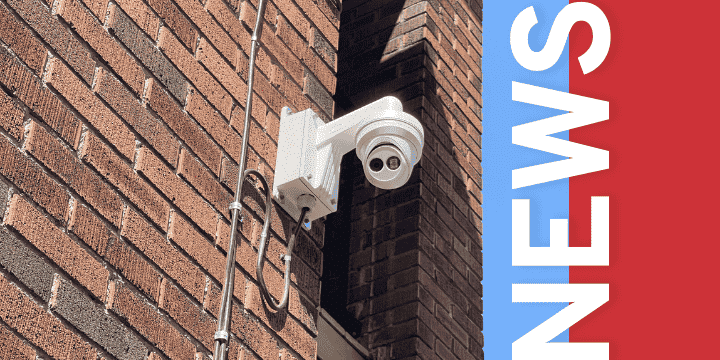
    This community-driven initiative is focused on increasing visible security presence in the downtown core. Participating businesses install approved, outward-facing security cameras that contribute to a broader safety network. The objective is clear: deter criminal activity, improve situational awareness, and create a stronger sense of confidence for customers, staff, and neighbouring storefronts.

    For business owners, the financial support component is significant. Eligible participants may access funding of up to $5,000 to offset the cost of installing compliant camera systems. This reduces the barrier to entry for high-quality, commercial-grade surveillance and allows more businesses to take part in the program.

    The impact extends beyond individual storefronts. Visible cameras act as a deterrent. When properly positioned and clearly identifiable, they signal oversight and accountability. In many cases, that presence alone can reduce opportunistic incidents such as vandalism, theft, and property damage. When incidents do occur, professionally installed systems provide evidentiary-quality footage that can support investigations and insurance claims. 

    Participation in Project Green Light is not about installing consumer-level devices. It requires commercial-grade equipment, thoughtful coverage planning, and reliable connectivity to ensure performance in a high-traffic urban environment. Businesses benefit from a system that is engineered for durability, clarity, and long-term operation.

    This initiative also reinforces collaboration between the business community and the city. Safety strategies are most effective when they integrate municipal oversight with private-sector participation. By aligning camera visibility across multiple storefronts, the downtown core becomes a more unified and monitored environment rather than a collection of isolated systems.

    For Windsor business owners, this is a practical opportunity to invest in security while leveraging available funding. It supports crime deterrence, strengthens operational resilience, and demonstrates a visible commitment to community safety.

    If you operate in the downtown core and are considering upgrading or installing security cameras, now is the time to explore how Project Green Light funding can support your investment. 

  • Why Winter Is the Worst Time for a Fire System Failure for Commercial Properties

    Why Winter Is the Worst Time for a Fire System Failure for Commercial Properties

    Winter brings unique challenges that increase fire risk and strain fire protection systems in ways that can put commercial properties, tenants, and operations at serious risk. For property managers and facility operators, the colder months are a time when fire detection and response systems must perform flawlessly—yet they are also when failures are most likely and consequences are most severe.

    From extreme cold impacting system components to slower emergency response times and increased heating loads, winter is the time when fire protection systems can face their toughest test. Proper maintenance, monitoring, and planning must be part of every commercial property’s winter strategy. 

    Cold Temperatures Can Interfere With Fire Protection Equipment

    Fire detection and suppression systems are designed to operate within specific temperature ranges. When those conditions are not met, performance can degrade:

    Detectors may not respond properly: Temperature fluctuations or condensation inside units can affect sensor sensitivity and lead to delayed alerts.

    Sprinkler systems can freeze: Pipes and sprinkler heads exposed to extreme cold risk freezing or blockage. Maintaining minimum temperatures in areas with wet pipe systems is essential for continued readiness.

    Wiring and power systems can be stressed: Ice, condensation, and temperature extremes can contribute to corrosion or weakened signal transmission between alarm components and control panels.

    These challenges are not hypothetical. Commercial facility managers across Canada and the northern United States face real impacts from winter weather when fire safety systems are improperly protected or not regularly tested once temperatures drop.

    • Winter Increases Fire Risk in Commercial Buildings
    • Cold weather patterns increase reliance on mechanical and electrical systems that are common fire starters:
    • Heating equipment and boilers
    • Portable heaters in poorly insulated spaces
    • Higher circuit loads from lighting and electrical systems
    • Combustible storage near heat sources

    Almost every commercial winter preparedness checklist includes fire alarm and suppression system inspection as a critical item precisely because winter conditions elevate risk.

    Power Outages Compound the Problem

    Winter storms can knock out power grids, leaving parts of a building without electricity. If fire alarm systems, emergency lighting, and monitoring connections do not have reliable backup power, protection can be lost at the worst possible moment.

    Power issues can:

    • Disrupt alarm panel operation
    • Interrupt communication with monitoring centres
    • Prevent emergency lighting from guiding occupants during evacuations

    Ensuring backup power systems such as UPS or generator support for fire protection systems is vital for winter reliability and code compliance.

    Monitoring and Verification Are Critical in Winter Conditions

    A commercial fire alarm system can detect smoke and heat, but if that signal does not reach the right responder immediately, valuable time is lost. For property managers, professional monitored systems ensure that fire events—even during after hours or power disruptions—are escalated without delay.

    Professional monitoring:

    • Receives alarm signals 24/7
    • Notifies emergency services immediately
    • Alerts building contacts and stakeholders
    • Helps verify incidents to reduce false alarm dispatches

    This enhances the safety of tenants and reduces uninsured losses.

    Why ULC Fire Monitoring Matters in Winter

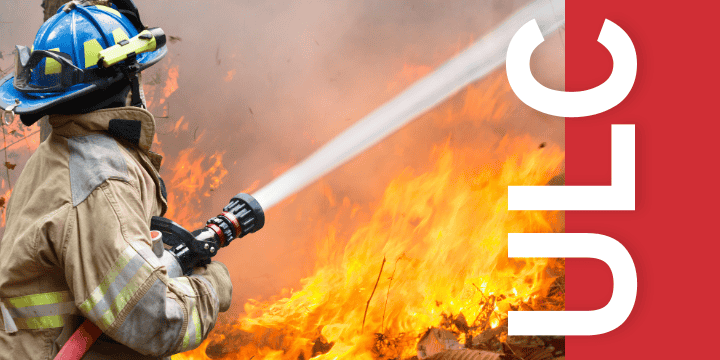
    For commercial properties, ULC-listed fire monitoring adds an essential layer of reliability during winter months. ULC monitoring follows nationally recognized standards for alarm signal handling, operator response, and emergency dispatch procedures. This ensures that when a fire alarm is triggered, the event is processed quickly, accurately, and in full compliance with Canadian fire safety protocols.

    In winter, when power outages, frozen equipment, and delayed response times increase risk, ULC monitoring provides consistent oversight and dependable escalation to emergency services. For property managers, this level of certified monitoring helps support Fire Code compliance, insurance requirements, and tenant safety when conditions are most challenging.

    Regulatory and Compliance Expectations Still Apply in Winter

    In Ontario, commercial property owners are responsible for maintaining fire protection systems in compliance with the Fire Code (O. Reg. 213/07), which includes responsibilities for detection, suppression, and alarm systems. This includes ongoing maintenance, testing, and ensuring systems operate effectively at all times of year.

    Failure to maintain systems properly can result in regulatory fines, liability exposure, and increased insurance risk.

    Maintenance Requirements Increase in Winter

    To reduce the risk of failure when it matters most, property managers should prioritize:

    • Fire alarm system checks before and during winter
    • Battery and backup power verification
    • Sprinkler system inspection for freeze protection
    • Control panel diagnostics and network connectivity tests
    • Documentation of maintenance and test results
    • Routine inspections not only support safety but also bolster compliance and can improve outcomes with insurers in the event of a loss.
    • Empty and Underused Spaces Are at Greater Risk

    Vacant areas within commercial buildings—such as storage rooms, lease spaces during tenant transitions, or off-season warehouse areas—are more vulnerable in winter because:

    • They may not maintain adequate temperatures for fire system components
    • They are less likely to have frequent visual inspection
    • Fires can grow unnoticed until they affect adjoining occupied areas

    These spaces require the same attention to fire protection readiness as high-traffic areas.

    Staff Training and Emergency Planning Matter More in Winter

    Winter conditions can slow evacuation and emergency response. Snow, ice, and frozen doors or exits create barriers that are not present in other seasons. Regular staff training, updated evacuation routes, and winter-specific emergency plans help ensure safety when a fire event does occur.

    Final Thoughts for Property Managers

    Winter presents a disproportionate risk to commercial fire protection systems. Extreme cold, increased mechanical loads, power outages, and increased fire hazards from heating systems all contribute to greater likelihood of failure when detection and response are most needed.

    For commercial property owners and managers, winter preparation should include:

    • Rigorous fire system inspection and maintenance
    • Professional monitoring for 24/7 incident escalation
    • Backup power planning and verification
    • Coordination with tenants and staff on winter emergency procedures
    • Understanding these risks and acting proactively ensures that fire protection systems remain resilient even in the harshest conditions.

    Winter may be cold, but your fire protection system should remain reliably hot when it matters most.

  • Cost Analysis of Overnight Security: Why Businesses Are Switching to Video Monitoring

    Cost Analysis of Overnight Security: Why Businesses Are Switching to Video Monitoring

    Security remains a top priority for businesses of all types and sizes. As threats such as theft, vandalism, and liability risks grow, companies increasingly realise that traditional security approaches—like hiring overnight guards or relying solely on passive cameras—are no longer the most effective or cost-efficient solution.

    In 2026, more organisations are making the switch to video monitoring as their primary overnight security strategy. This shift is driven not only by cost advantages but also by better detection, faster response, and smarter technology.

    Below, we explore why businesses are choosing video monitoring over other overnight security options and how this transition supports stronger protection and operational efficiency. 

    Traditional Overnight Security: The Cost Challenge

    For decades, hiring on-site security guards to provide overnight coverage was the standard practice for businesses with high value assets, multiple access points, or vulnerability during off-hours.

    However, on-site guards come with ongoing and often unpredictable costs:

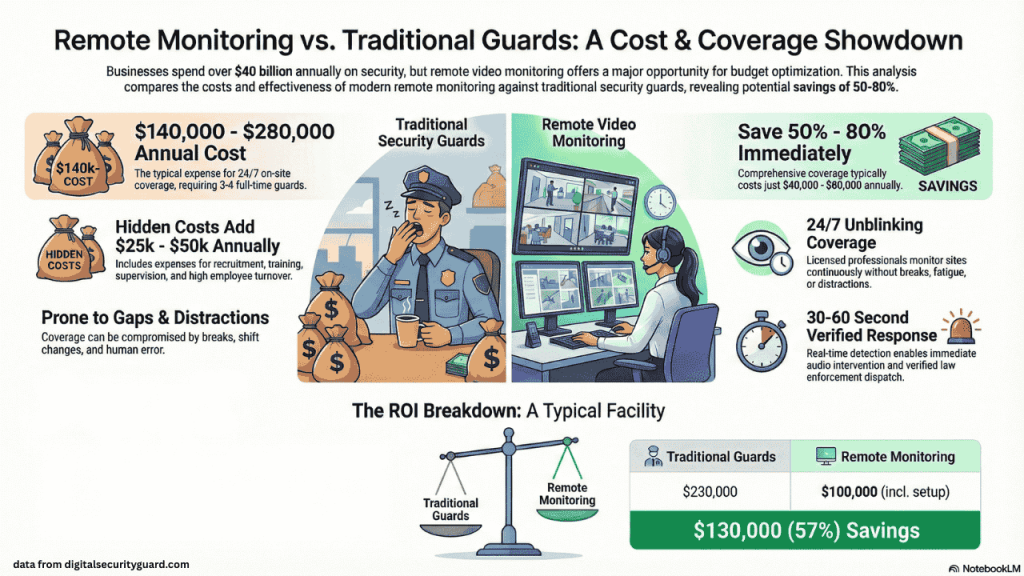
    Salaries and Benefits: A single full-time guard can cost a business $35,000 – $50,000 annually, not including mandatory benefits and insurance premiums that add another 30 % – 40 % to total compensation. When 24/7 coverage is needed, three to four guards are often required to cover shifts, pushing yearly costs toward $140,000 – $280,000 per location.

    Training, Management and Overhead: Hiring, training, scheduling, and supervising guards involves administrative resources that many businesses find burdensome.

    Guard Limitations: Human guards can miss incidents during breaks or shift changes and may not be able to visually monitor all areas of a large facility simultaneously.

    As many organisations reassess their security budgets, these ongoing expenses and limitations make the traditional model increasingly difficult to justify.

    Why Video Monitoring Is Gaining Ground

    Video monitoring refers to the use of cameras connected to remote monitoring services that watch for incidents in real time. When suspicious or unauthorised activity is detected, trained professionals or AI-assisted systems verify events and trigger alerts, deterrents, or emergency responses.

    Here’s why more businesses are switching:

    1. Cost Savings Compared to Physical Guards

    Remote video monitoring typically costs significantly less than the cumulative expense of staffing on-site guards. Studies and industry sources suggest that transitioning to video monitoring can lower security costs by 60 % – 70 % compared to an equivalent 24/7 on-site security guard model.

    Even with monthly monitoring fees, technology costs, and installation fees, companies often see:

    • Reduced staffing overhead
    • Lower benefits and payroll costs
    • Fewer management requirements

    This is especially relevant for businesses with multiple locations that previously needed separate guard teams for each site.

    2. Continuous, Scalable Coverage

    Video monitoring systems operate 24/7 without fatigue, breaks, or shift changes. Cameras cover every angle of the property, and remote operators or AI systems can monitor multiple sites simultaneously.

    This scalability is difficult to achieve with hired guards, who are limited by physical presence and staffing constraints.

    By providing continuous coverage across one or many facilities at once, video monitoring ensures that threats are detected even during periods of lowest activity—like overnight.

    3. Improved Incident Verification and Response

    Modern video monitoring solutions are equipped with advanced features:

    • AI-enhanced analytics that filter real incidents from irrelevant movement
    • Live operator support that verifies and escalates genuine threats
    • Two-way audio systems and automated deterrents
    • Seamless coordination with law enforcement when needed

    This combination of human and machine oversight reduces false alarms and supports faster, more accurate responses.

    Remote guarding services that combine cameras with real-time analysis provide proactive intervention before incidents escalate.

    4. Better Documentation and After-Action Support

    Video monitoring systems automatically record and timestamp footage of critical events. This visual evidence is invaluable when:

    • Filing insurance claims
    • Defending against liability or theft claims
    • Reviewing security gaps
    • Supporting law enforcement investigations

    Video documentation provides factual clarity that traditional guards may not be able to supply after an incident occurs.

    5. Insurance and Risk Management Benefits

    Many insurers view monitored security systems as reduced-risk investments. While not guaranteed, monitored video systems can improve a business’s risk profile and in some cases lead to better insurance terms or premium considerations.

    By demonstrating active security measures that deter incidents and ensure rapid response, businesses can enhance their overall risk management strategy.

    6. Enhanced Deterrence and Proactive Prevention

    The presence of monitored cameras often deters potential criminal activity before it starts. Unlike traditional passive CCTV that only records, monitored systems notify authorities or security teams immediately when suspicious activity is detected, reducing the likelihood of break-ins, vandalism, or looting.

    Remote monitoring also allows for active deterrence tools like voice-down warnings when suspicious behaviour is identified.

    Cost Considerations for Video Monitoring

    Video monitoring costs vary based on business size, number of cameras, technology capabilities, and risk level. For example, services may range from around $30 to $150 per month per camera, with higher pricing for advanced analytics, AI, and enterprise solutions.

    While this expense is ongoing, most businesses find that the predictable monthly cost is easier to budget for than fluctuating labour expenses tied to security staffing.

    Making the Switch: Practical Tips

    If your business is evaluating overnight security options, consider these steps:

    • Assess risk areas and vulnerable hours
    • Determine how many cameras and sensors are needed
    • Evaluate providers with AI or professionally monitored capabilities
    • Compare long-term cost projections versus on-site guard staffing
    • Consider integration with alarms, access control, and environmental sensors

    A tailored video monitoring solution can strengthen overall security while making financial sense.

    Overnight security is too important to leave to chance or outdated practices. As technology evolves and business risks increase, video monitoring offers a cost-effective, scalable, and proactive approach that many companies are adopting in 2026.

    By switching from traditional guards to intelligent video monitoring, businesses can achieve continuous protection, enhanced incident response, and long-term savings—all while supporting stronger safety outcomes for people, property, and reputation.

    When evaluating your security strategy this year, video monitoring deserves a close look—not just as an option, but as a strategic investment in your business’s future.

  • Security ONE Selected by the City of Windsor as Partner for Downtown Monitored Camera Expansion

    Security ONE Selected by the City of Windsor as Partner for Downtown Monitored Camera Expansion

    Security ONE has been selected by the City of Windsor as its security technology partner to deliver and support an expanded network of professionally monitored security cameras in downtown Windsor as part of the City’s Project Greenlight initiative.

    Project Greenlight is part of Windsor’s ongoing strategy to strengthen public safety and support downtown revitalization, building on the success of previous pilot programs that demonstrated the value of monitored camera networks in deterring crime, aiding response, and increasing situational awareness for businesses and emergency services.

    Under the partnership, Security ONE will be responsible for the design, installation, and ongoing support of up to 90 commercial-grade live monitoring camera systems for approved downtown businesses. The work will be carried out by Security ONE’s local installation teams and supported through its professional monitoring infrastructure.

    Approved businesses may receive funding of up to $5,000 toward the installation of live monitoring cameras. Participating businesses will be responsible for the ongoing operational and monitoring fees required to maintain professional oversight and system performance.

    “This project reflects what Security ONE does best; delivering reliable, professionally monitored security technology that supports safer communities, Being selected by the City of Windsor is a strong vote of confidence in our team, our technology, and our ability to deliver secure, scalable solutions that serve the community.”

    Security ONE brings decades of experience providing monitored video surveillance, access control, and intrusion detection systems to commercial, municipal, and community clients across Southwestern Ontario. The company’s focus on locally delivered service, professional monitoring, and long-term support positions it to deliver lasting value for participating businesses.

  • Why ULC Fire Monitoring Should Be on Your 2026 Checklist

    Why ULC Fire Monitoring Should Be on Your 2026 Checklist

    Fire protection is a critical responsibility for any business owner. While fire alarm systems provide local alerts, true protection comes from professional monitoring that meets national standards. ULC fire monitoring delivers a higher level of safety, compliance, and reliability that many commercial properties in Ontario either require or strongly benefit from.

    As safety expectations and regulations continue to evolve, ULC fire monitoring should be a priority for businesses planning their risk management strategies for 2026.

    What Is ULC Fire Monitoring

    ULC, or Underwriters Laboratories of Canada, sets strict standards for fire alarm systems and monitoring services. A ULC-listed monitoring service ensures that alarms are received, verified, and escalated according to nationally recognized protocols.

    Unlike basic alarm monitoring, ULC fire monitoring follows regulated procedures for:

    • Signal processing
    • Emergency notification
    • Operator training
    • System testing
    • Documentation and reporting

    This creates a consistent, accountable, and reliable response process when a fire alarm is triggered.

    Many commercial buildings in Ontario are required to use ULC-listed monitoring as part of Fire Code compliance, insurance policies, or municipal regulations.

    Why Fire Monitoring Is a Business Essential

    Fires can disrupt operations, damage property, and put employees and customers at risk. Even small incidents can lead to major financial and operational losses.

    Common commercial fire risks include:

    • Electrical equipment
    • Mechanical failures
    • Kitchen operations
    • Heating systems
    • Flammable materials storage
    • Overloaded circuits

    Fires often occur after hours, when buildings are unoccupied and local alerts go unnoticed. Without professional monitoring, a fire can burn for an extended period before emergency services are notified.

    ULC fire monitoring ensures that every alarm signal results in immediate action.

    24 Hour Professional Oversight

    With ULC monitoring, your fire alarm system is connected to a certified monitoring centre operating around the clock.

    When an alarm is triggered:

    • The signal is received instantly
    • Operators follow ULC response protocols
    • Emergency services are dispatched
    • Key contacts are notified
    • The event is documented

    This process does not rely on employees hearing alarms, calling for help, or being present in the building. Response happens automatically and professionally. For businesses with overnight operations, multiple locations, or remote sites, this level of oversight is critical.

    Compliance and Insurance Advantages

    Many commercial properties are required to have ULC-listed fire monitoring to meet Ontario Fire Code, building regulations, and insurance requirements.

    ULC monitoring supports:

    • Fire Code compliance
    • Insurance policy conditions
    • Risk assessments
    • Safety audits
    • Liability protection

    In many cases, insurance providers view ULC monitoring as a risk-reduction measure, which can support favourable coverage terms.

    For business owners, compliance is not just about avoiding penalties. It is about protecting people, assets, and reputation.

    Protection When Your Business Is Closed

    Fires that occur after hours can cause the most damage because they go unnoticed longer.

    ULC fire monitoring ensures:

    • Immediate notification of emergency services
    • Faster response times
    • Reduced fire spread
    • Minimized business disruption
    • Protection for neighbouring properties

    For warehouses, offices, retail stores, manufacturing facilities, and multi-tenant buildings, after-hours protection is a major advantage.

    Integrated Commercial Fire Systems

    ULC-monitored systems can integrate with:

    • Fire alarm panels
    • Smoke and heat detectors
    • Sprinkler systems
    • Carbon monoxide sensors
    • Emergency lighting

    This creates a complete life safety solution that monitors multiple fire-related risks through one certified platform.

    Many systems can also integrate with intrusion alarms and access control, giving businesses centralized oversight of their entire safety infrastructure.

    Protecting Employees and Customers

    Workplace safety is a core responsibility for any business. Employees and customers rely on building owners to provide a secure environment.

    ULC fire monitoring supports:

    • Faster evacuation
    • Quicker emergency response
    • Improved life safety outcomes
    • Clear incident documentation

    This helps reduce risk exposure and demonstrates a commitment to professional safety standards.

    Supporting Business Continuity

    Fire incidents can interrupt operations, damage equipment, and lead to long recovery periods.

    ULC fire monitoring helps limit:

    • Property damage
    • Operational downtime
    • Financial loss
    • Reputational impact

    By ensuring rapid emergency response, businesses can reduce the severity of incidents and return to normal operations more quickly.

    Why 2026 Is the Right Time to Upgrade

    Many commercial fire alarm systems were installed years ago and may not meet today’s monitoring or compliance expectations.

    Upgrading to ULC fire monitoring in 2026 allows businesses to:

    • Strengthen Fire Code compliance
    • Improve emergency response
    • Reduce liability risks
    • Support insurance requirements
    • Enhance overall safety standards

    It is a proactive investment in long-term risk management.

    ULC fire monitoring is not just a regulatory requirement. It is a strategic safety decision for businesses that want reliable protection, professional response, and compliance confidence.

    By ensuring your fire alarm system is monitored to national standards, you protect your employees, your customers, and your operations.

    As you plan your business safety priorities for 2026, ULC fire monitoring should be a key item on your checklist.

  • Heading Out of Town? How to Keep Your Home Secure While You Travel

    Heading Out of Town? How to Keep Your Home Secure While You Travel

    Winter is a popular time for travel in Ontario. Whether you are heading south for a vacation, visiting family, or spending time at a cottage, leaving your home unattended during the colder months comes with unique security risks. Shorter days, harsh weather, and seasonal routines can make properties more vulnerable to break ins, damage, and emergencies.

    The good news is that with the right planning and the right security tools, you can enjoy your time away while keeping your home protected.

    Why Winter Increases Security Risks

    Winter creates ideal conditions for opportunistic crime and unexpected property issues. Darkness arrives earlier, snow can hide footprints, and many homes are left unoccupied for extended periods.

    Common winter risks include:

    • Break ins while the home is empty
    • Frozen pipes and water damage
    • Fire hazards from heating systems
    • Carbon monoxide exposure
    • Missed deliveries or visible absence

    Criminals often look for signs that a home is not occupied. Unshovelled driveways, dark windows, and overflowing mail can signal that no one is home.

    Make Your Home Look Lived In

    One of the most effective ways to reduce risk is to make your home appear occupied.

    Smart lighting systems can turn lights on and off at scheduled times or when motion is detected. Interior and exterior lights create the appearance of activity and discourage unwanted attention.

    You can also ask a neighbour to:

    • Collect mail and packages
    • Shovel the driveway or walkway
    • Park in your driveway occasionally

    These small actions help maintain the appearance of a lived in home.

    Secure All Entry Points

    Before leaving, inspect every door, window, and access point.

    Make sure:

    • All doors and windows are locked
    • Garage doors are secured
    • Sliding doors have reinforced locks
    • Basement windows are protected

    Smart locks and door sensors provide extra peace of mind by allowing you to check lock status remotely and receive alerts if a door is opened.

    If you have an alarm system, ensure it is armed and functioning properly before you leave.

    Use Video Surveillance for Visibility

    Security cameras are one of the most effective deterrents and monitoring tools, especially in winter.

    Modern camera systems allow you to:

    • View live video remotely
    • Receive motion alerts
    • Check on deliveries
    • Monitor activity during storms

    Visible cameras discourage intruders, while recorded footage provides valuable evidence if an incident occurs.

    For winter travel, cameras at entry points, driveways, and backyards are particularly useful.

    Professional Monitoring Provides Constant Protection

    When you are away from home, professional monitoring becomes even more valuable.

    If an alarm is triggered due to a break in, fire, or environmental hazard, a monitoring centre can respond immediately and dispatch emergency services.

    This ensures that:

    • Help is sent even if you are unreachable
    • Issues are addressed quickly
    • Damage is minimized
    • Your property is protected around the clock

    Self monitored systems rely on you seeing alerts and responding in real time. While travelling, that may not always be possible.

    Protect Against Winter Environmental Risks

    Protect Your Home from Fire 

    Winter brings increased fire risks due to heating systems, fireplaces, space heaters, and holiday decorations.

    Before leaving, make sure:

    • Smoke alarms are working
    • Heating systems are serviced
    • Fireplaces are properly maintained
    • Space heaters are unplugged
    • Combustible items are cleared away

    Monitored smoke detectors add an extra layer of safety by alerting emergency services if a fire is detected while the home is empty.

    Avoid Frozen Pipes and Water Damage

    Frozen pipes are one of the most common winter problems for vacant homes. A burst pipe can cause extensive damage in a short amount of time.

    To reduce risk:

    • Keep the heat set to a safe minimum temperature
    • Insulate exposed pipes
    • Shut off the main water supply if possible
    • Use water and freeze sensors

    Smart water sensors detect leaks and freezing conditions early. When paired with monitoring, they can trigger alerts and prompt immediate action before damage becomes severe.

    leak from frozen pipe

    Manage Deliveries and Online Orders

    Winter travel often coincides with online shopping and holiday deliveries. Packages left outside for days are easy targets for theft and signal that no one is home.

    Video doorbells allow you to:

    • See when packages arrive
    • Speak to delivery drivers
    • Monitor your porch remotely

    You can also pause deliveries, use secure drop locations, or have a trusted neighbour collect items while you are away.

    Use Smart Home Technology for Peace of Mind

    Modern security systems integrate multiple tools into one platform.

    With a mobile app, you can:

    • Check system status
    • View camera feeds
    • Lock doors
    • Adjust lights
    • Receive real time alerts

    This level of control allows you to stay connected to your home no matter where you are.

    Winter travel should be relaxing, not stressful. By taking a few proactive steps and using the right security technology, you can protect your home from break ins, fire, carbon monoxide, and winter damage.

    Professional monitoring, smart cameras, environmental sensors, and automated lighting all work together to keep your home safe while you are away.

    With proper preparation, you can enjoy your winter getaway knowing your home is protected, monitored, and secure.

  • Start the Year Protected: Why Professional Monitoring Is Worth It

    Start the Year Protected: Why Professional Monitoring Is Worth It

    A new year is the perfect time to reassess how well your home or business is protected. While many people invest in cameras, alarms, and smart devices, the true value of a security system comes from what happens when something goes wrong. Professional monitoring ensures that when an emergency occurs, there is an immediate, reliable response, even when you are not there to act.

    Whether it is a break in, a fire, or a carbon monoxide incident, professional monitoring provides real protection that goes beyond basic alerts. For Ontario homeowners and businesses, starting the year with monitored security means starting the year with confidence.

    What Professional Monitoring Really Means

    Professional monitoring connects your security system to a certified monitoring centre that operates 24 hours a day, seven days a week. When an alarm is triggered, trained operators receive the alert instantly and take appropriate action. This may include contacting you, dispatching emergency services, or both.

    Unlike self monitored systems that rely on app notifications and personal response, professional monitoring does not depend on you being available, awake, or near your phone. Someone is always watching over your property.

    Faster Emergency Response When It Matters Most

    In any emergency, time is critical. Fires spread quickly. Carbon monoxide exposure can become deadly in minutes. Break ins can escalate if not addressed immediately. 

    With professional monitoring, alerts are verified and emergency services are dispatched without delay. This faster response can reduce property damage, improve safety outcomes, and in some cases, save lives.

    If you are asleep, at work, on vacation, or dealing with an emergency yourself, the monitoring centre continues to act on your behalf.

    Protection Even When You Are Not Home

    One of the biggest advantages of professional monitoring is continuous protection. Many incidents happen when properties are unoccupied. Homes are often targeted during vacations or work hours. Businesses are most vulnerable overnight.

    Monitored systems ensure that no matter where you are, your property is still protected. Cameras, alarms, and environmental sensors remain active, and any triggered event is handled by professionals. 

    This level of coverage offers peace of mind that self monitored systems cannot match.

    Reducing False Alarms and Unnecessary Stress

    False alarms are frustrating for property owners and emergency responders. Professional monitoring centres use verification processes to reduce unnecessary dispatches. This may include video verification, audio confirmation, or multiple sensor checks.

    By confirming real threats before contacting emergency services, monitored systems help ensure that response resources are used appropriately and that property owners avoid fines or penalties related to false alarms.

    This also means fewer stressful situations caused by accidental triggers or system errors.

    Fire and Carbon Monoxide Protection That Goes Beyond Beeping Alarms

    Smoke and carbon monoxide alarms are essential, but traditional alarms only work if someone is home to hear them and act.

    With professional monitoring, fire and CO alarms are connected to a monitoring centre. If dangerous levels are detected, operators can immediately dispatch emergency services.

    This is especially important for:

    • Homes with children or seniors
    • Rental properties
    • Vacation properties
    • Commercial buildings
    • Properties that are often unoccupied

    In Ontario, updated Fire Code requirements are placing more emphasis on proper CO alarm placement. Professional monitoring ensures that these devices do more than meet minimum compliance. They actively protect lives.

    Smart Technology Works Best With Human Oversight

    Modern security systems use advanced technology such as AI video analytics, smart sensors, and automated alerts. While these tools are powerful, they are most effective when paired with trained professionals.

    Technology can detect unusual activity, but human operators interpret context and take appropriate action. This combination of smart systems and real people creates a stronger, more reliable security solution.

    Professional monitoring adds the human decision making that technology alone cannot provide.

    Peace of Mind for Families and Property Owners

    Security is not just about equipment. It is about confidence. Knowing that someone is always monitoring your system reduces worry and allows you to focus on daily life without constantly checking alerts or camera feeds.

    For families, this means greater safety for loved ones. For property owners, it means reduced risk and better protection for investments.

    Professional monitoring provides reassurance that help is always available when it is needed most.

    A Smart Start to the New Year

    The beginning of the year is a natural time to review safety priorities. Many people set goals related to health, finances, and home improvements. Security should be part of that plan.

    Upgrading to professional monitoring helps ensure that your security system is not just installed, but actively protecting you every day. It is an investment in safety, reliability, and long term peace of mind.

    Professional monitoring transforms a security system from a set of devices into a complete protection solution. With 24 hour oversight, faster emergency response, and human support, monitored systems provide a level of safety that self monitored systems cannot match.

    For Ontario homeowners and businesses, starting the year protected means choosing a security approach that delivers real response, real reliability, and real peace of mind.

  • Smart Security Upgrades for 2026: What Ontario Homes and Businesses Should Be Investing In

    Smart Security Upgrades for 2026: What Ontario Homes and Businesses Should Be Investing In

    Security technology is evolving rapidly, and 2026 is shaping up to be a pivotal year for smarter, more proactive protection. From AI-powered video analytics to advanced environmental monitoring, today’s security systems do far more than sound an alarm. They help prevent incidents, improve response times, and give property owners greater control over their safety.

    For homeowners and businesses across Ontario, upgrading your security system is no longer just about protecting against break-ins. It is about creating a connected, intelligent safety ecosystem that protects people, property, and peace of mind.

    Here are the smart security upgrades worth considering in 2026. 

    AI-Powered Video Surveillance

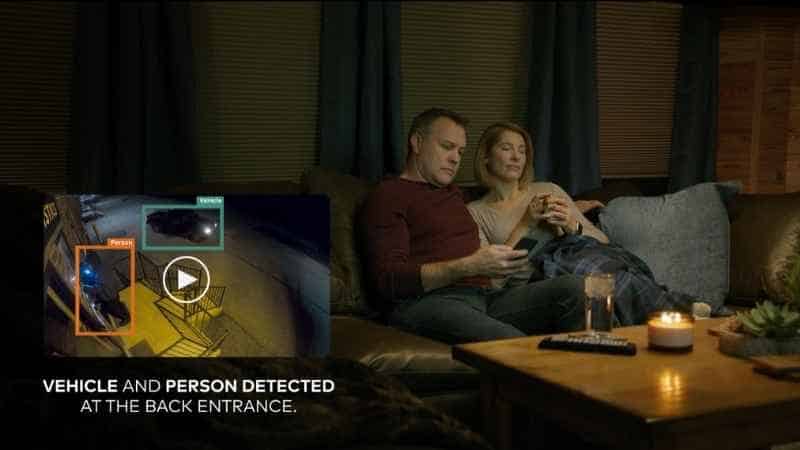
    Traditional cameras record footage. Modern cameras analyze it. AI-enabled video systems can now detect people, vehicles, loitering, and unusual behaviour in real time. Instead of scrolling through hours of footage, users receive alerts only when something meaningful happens.

    For businesses, this means faster response to suspicious activity, reduced false alarms, and better incident documentation. For homeowners, it means smarter alerts that distinguish between a delivery driver, a neighbour, and a potential threat.

    In 2026, expect to see wider adoption of:

    • Person detection and facial recognition for access control
    • Vehicle analytics for parking and perimeter monitoring
    • Behaviour analysis to identify potential risks before incidents occur

    AI transforms video from a passive tool into an active layer of protection.

    Proactive Video Monitoring

    Proactive video monitoring goes beyond recording. It involves trained professionals actively watching camera feeds and responding in real time.

    If suspicious activity is detected, monitoring agents can issue live voice warnings, activate sirens, or dispatch emergency services. This approach helps stop crimes before they escalate.

    Businesses are increasingly choosing proactive video monitoring to protect:

    • Overnight operations
    • Construction sites
    • Retail properties
    • Industrial yards
    • Remote facilities

    This upgrade is especially valuable for properties that cannot rely on traditional guards or on-site staff after hours.

    Smart Access Control Systems

    Keys can be lost, copied, or stolen. Smart access control systems provide a more secure and flexible alternative.

    Modern access control allows businesses and homeowners to manage entry through:

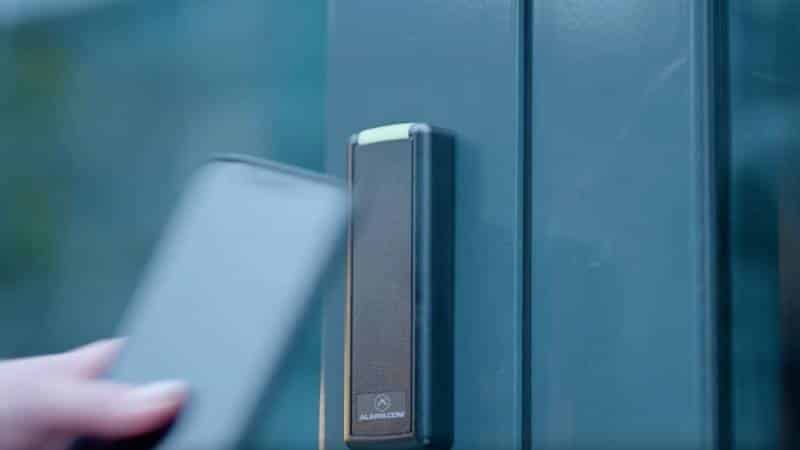
    • Key fobs and mobile credentials
    • PIN codes and biometric access
    • Remote door locking and unlocking
    • Time-based access permissions

    For commercial properties, this means better control over who enters the building and when. For residential users, it means convenience without sacrificing security.

    In 2026, access control is becoming more integrated with video, alarms, and mobile apps for a unified security experience.

    access control for business with mobile credentials

    Advanced Environmental Monitoring

    Security is not just about crime prevention. Environmental threats like fire, flooding, and carbon monoxide are just as dangerous.

    Smart systems now include:

    • Monitored smoke and heat detectors
    • Carbon monoxide detection
    • Water and freeze sensors
    • Temperature and humidity alerts

    These devices provide early warnings that help prevent property damage and protect occupants. With professional monitoring, emergency services can be dispatched even if no one is home.

    As Ontario continues to update Fire Code and safety regulations, environmental monitoring is becoming an essential upgrade for both compliance and safety.

    Smart Lighting and Deterrence Tools

    Lighting plays a major role in crime prevention. Smart lighting systems can be programmed to turn on when motion is detected or follow scheduled patterns.

    When integrated with cameras and alarms, lighting becomes an active deterrent. Intruders are less likely to target a well-lit property that appears monitored and occupied.

    Smart deterrence tools may also include:

    • Audible warnings
    • Visible alarm indicators
    • Live voice announcements

    These features help prevent incidents before police involvement is even necessary.

    System Integration and Automation

    One of the biggest trends for 2026 is full system integration. Instead of managing separate systems for alarms, cameras, access control, and environmental monitoring, everything works together in a single platform.

    This allows for automated responses such as:

    • Doors locking when an alarm is triggered
    • Cameras recording when motion is detected
    • Lights activating during a security event
    • Emergency alerts being sent instantly
    • Remote access to monitor and control
    • Get insights into business activity

    Automation improves response speed and reduces human error.

    Professional Monitoring Remains Essential

    While smart devices are powerful, they are most effective when backed by professional monitoring.

    Monitored systems ensure that:

    • Emergency services are dispatched quickly
    • Alerts are verified by trained operators
    • False alarms are reduced
    • Help is available 24/7

    Whether it is a break-in, fire, or carbon monoxide event, professional monitoring ensures that someone is always watching over your property.

    In 2026, monitoring is not just about alarms. It is about proactive protection, real-time response, and continuous oversight.

    Why Upgrading in 2026 Makes Sense

    Technology evolves quickly, but security risks remain constant. Upgrading your system ensures you are protected against modern threats with modern tools.

    Smart security upgrades offer:

    • Better detection
    • Faster response
    • Greater control
    • Improved safety
    • Peace of mind

    For businesses, they also support operational efficiency, liability reduction, and regulatory compliance. For homeowners, they provide confidence that loved ones and property are protected.

    Smart security in 2026 is about more than cameras and alarms. It is about creating a connected, intelligent system that works proactively to protect what matters most.

    From AI-powered video to environmental monitoring and professional response, today’s upgrades are designed to prevent incidents, not just record them.

    If you are planning to improve your security this year, now is the right time to invest in technology that delivers real protection, real insight, and real peace of mind.

  • Smoke Alarms vs. Carbon Monoxide Alarms: What Ontario Homeowners Need to Know

    Smoke Alarms vs. Carbon Monoxide Alarms: What Ontario Homeowners Need to Know

    When it comes to protecting your home and family, smoke alarms and carbon monoxide alarms are two of the most important safety devices you can install. While they are often grouped together, they serve very different purposes and both play a critical role in preventing injury, property damage, and loss of life.

    Understanding the difference between these alarms, where they should be installed, and how they work can help ensure your home is properly protected.

    What Does a Smoke Alarm Detect

    Smoke alarms are designed to detect combustion particles in the air. These particles are released when a fire starts, even in its earliest stages. Smoke alarms provide an audible warning so occupants can escape before flames spread or toxic smoke builds up.

    Fires can start from many sources including cooking, electrical issues, heating equipment, and unattended candles. Smoke spreads quickly and can become deadly within minutes. A working smoke alarm gives your family the time needed to react.

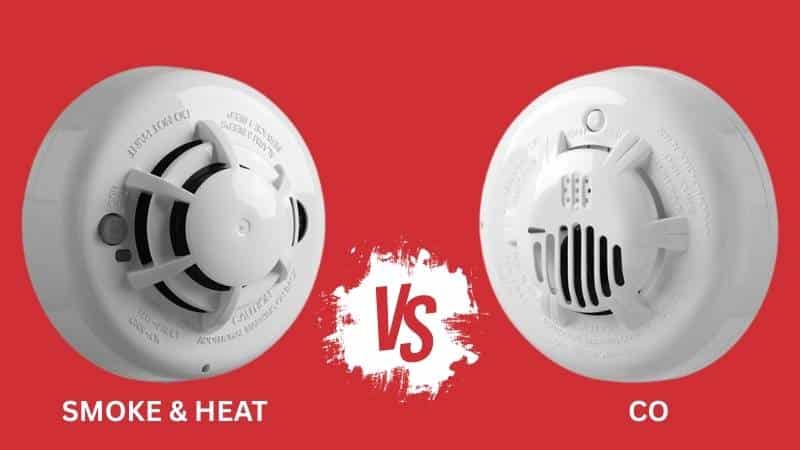
    smoke detector vs a CO detector

    What Does a Carbon Monoxide Alarm Detect

    Carbon monoxide alarms detect a gas that cannot be seen, smelled, or tasted. Carbon monoxide is produced when fuel does not burn completely. Common sources include furnaces, fireplaces, gas stoves, water heaters, and vehicles running in attached garages.

    Because carbon monoxide is invisible and odourless, people often do not realize there is a problem until symptoms appear. These can include headaches, dizziness, nausea, confusion, and in severe cases, loss of consciousness or death. A carbon monoxide alarm is often the only warning sign that dangerous levels are present.

    Why You Need Both Types of Alarms

    Smoke alarms and carbon monoxide alarms protect against different threats. One does not replace the other. A home can be at risk of fire without carbon monoxide, and it can also have dangerous carbon monoxide levels without a fire.

    Ontario’s updated Fire Code recognizes this by requiring carbon monoxide alarms in more areas of the home, especially where fuel-burning appliances or attached garages are present. Smoke alarms remain mandatory throughout residential properties.

    Having both systems installed correctly ensures protection from both visible dangers like fire and hidden dangers like carbon monoxide.

    Where Should These Alarms Be Installed

    Smoke alarms should be installed on every level of the home and near sleeping areas. Carbon monoxide alarms should be placed near bedrooms and on any storey where fuel-burning appliances, fireplaces, or attached garages are present.

    Always follow the manufacturer’s installation guidelines and local fire code requirements. Proper placement is just as important as having the alarms themselves.

    Testing and Maintenance Matter

    Both smoke and carbon monoxide alarms should be tested regularly. Batteries should be replaced as needed, and the entire unit should be replaced according to the manufacturer’s lifespan, typically every seven to ten years.

    An alarm that is not working properly cannot protect your home. Regular testing ensures the device will respond when it is needed most.

    Why Professional Monitoring Adds Extra Protection

    Traditional alarms rely on someone being home, awake, and able to respond. Professionally monitored smoke and carbon monoxide alarms send alerts directly to a monitoring centre when activated. Emergency services can be dispatched even if no one is home or if occupants are unable to respond.

    This added layer of protection can significantly reduce response times and improve outcomes in both fire and carbon monoxide emergencies.

    Smoke alarms and carbon monoxide alarms serve different but equally important purposes. Together, they create a comprehensive safety system for your home. With Ontario’s updated Fire Code placing greater emphasis on carbon monoxide detection, now is the right time for homeowners to review their alarm coverage and consider enhanced protection through professional monitoring.