WordPress on DigitalOcean

Category: Uncategorized

  • Stop Leaks Before They Cause Damage: How a Smart Water Tile Protects Your Home

    Stop Leaks Before They Cause Damage: How a Smart Water Tile Protects Your Home

    The Hidden Cost of Water Damage

    Water is one of the leading causes of home insurance claims in Canada, and the average claim costs over $13,000 according to the Insurance Bureau of Canada. What starts as a small, hidden leak behind a washing machine, under a sink, or near a water heater can lead to significant structural damage, ruined flooring, and even dangerous mould growth.

    Even more concerning? Many leaks go unnoticed for hours—or days—especially when homeowners are away. The result is not only expensive repairs but also higher insurance premiums and the loss of irreplaceable belongings.

    Early Detection Saves Thousands

    That’s where the Water Tile Sensor comes in. This small but powerful device integrates directly with your monitored security system to provide early leak detection and instant alerts. When moisture is detected, it sends a signal through your security network—promptly notifying you through our mobile app and your 24/7 local monitoring station.

    By catching leaks early, you can turn off the water supply, contact a plumber, and stop the damage before it starts. It’s one of the simplest and smartest ways to protect your home investment.
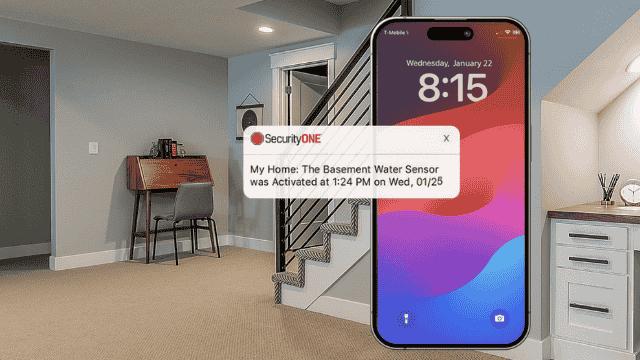
    water sensor sending a notification to a cell phone to protect from flood damnage

    Where to Use a Water Tile

    The Water Tile is discreet, battery-powered, and can be placed virtually anywhere that leaks might occur. Some of the best spots include:

    • Under sinks and vanities
    • Behind dishwashers or washing machines
    • Near sump pumps or water heaters
    • In basements or bathrooms prone to flooding

    A few strategic placements can provide complete peace of mind—especially when you’re away from home. 

    When it comes to home security, many homeowners think, “It won’t happen to me.” But sometimes, things go differently than expected, and a reliable monitoring service can make all the difference.

    Smart Integration for Total Protection 

    Unlike standalone leak detectors, the Water Tile is part of your integrated smart home security system. That means every alert is backed by professional monitoring and accessible through one app alongside your security cameras, smart locks, and alarms.

    Whether you’re on vacation, at work, or simply upstairs, you’ll always know if water is where it shouldn’t be.

    Protect Your Home from Costly Surprises

    Water damage is one of the most preventable household disasters—and the Water Tile makes it effortless to stay ahead of it.

    Call Security ONE today to learn how to add smart leak detection to your existing system and keep your home safe, dry, and protected.


  • How do Medical Alert Devices help in the “Golden Hour”?

    How do Medical Alert Devices help in the “Golden Hour”?

    Each year, approximately 20% to 30% of Canadian seniors experience one or more falls, making falls the leading cause of injury among older Canadians.

    Prompt medical intervention during the “Golden Hour”—the first hour following an emergency—is crucial for improving outcomes after such incidents. This article explores the importance of rapid response to falls among seniors and how Personal Emergency Response Systems (PERS) can play a vital role in ensuring timely assistance.

    What is the “Golden Hour”?

    The “Golden Hour” refers to the critical first hour after an emergency event, during which timely medical treatment significantly increases the likelihood of positive outcomes. For seniors who experience falls, immediate intervention within this period can prevent complications, reduce injury severity, and facilitate quicker recovery. Delayed assistance can lead to secondary issues such as dehydration, pressure sores, or hypothermia, especially if the individual is unable to summon help promptly.

    How does a Medical Alert Device help in the Golden Hour?

    Personal Emergency Response Systems (PERS) are designed to provide immediate access to assistance following a fall. Devices equipped with fall-detection technology can automatically connect users to trained care specialists who assess the situation and dispatch emergency services if necessary. This swift connection ensures that seniors receive help within the critical Golden Hour, even if they are unable to communicate due to injury.

    Golden Hour survival rates infographic

    For instance, our PERS devices feature automatic fall detection and GPS tracking, enabling rapid location identification and immediate connection to care specialists. This technology is particularly beneficial for seniors who live alone or have health conditions that increase their risk of falls, providing peace of mind for both individuals and their families.

    Advantages of PERS Over Standard Emergency Response

    When a senior activates their PERS device, care specialists gain instant access to their medical information, including allergies, pre-existing conditions, and specific instructions like lockbox codes for emergency responders. This comprehensive information allows for a more informed and efficient response compared to standard emergency calls. Additionally, care specialists can remain on the line, offering reassurance and guidance until help arrives, reducing anxiety and isolation during emergencies.

    Promoting Independence While Enhancing Safety

    The fear of falling can lead seniors to limit their activities, impacting their quality of life. PERS devices empower seniors to maintain their independence by ensuring that help is readily available at the press of a button. This support enables them to engage in daily activities with confidence, knowing that assistance is immediately accessible if needed.

    How PERS Can Support the Golden Hour Response

    The significance of a rapid response during the Golden Hour cannot be overstated for seniors who experience falls. PERS devices facilitate immediate connection to assistance, ensuring that seniors receive timely care, which is crucial for positive outcomes. 

    As we observe Fall Prevention Month, investing in PERS technology is a proactive step toward safeguarding the health and well-being of seniors, allowing them to live independently while having access to immediate support in the event of a fall. 

  • Secure Your New Business from Day One

    Secure Your New Business from Day One

    Opening a new business comes with many challenges, and one of the most crucial is ensuring the security of your premises, assets, and people. A comprehensive security plan not only protects against theft and damage but also builds the foundation for a safe working environment. Here are essential security tips, including the importance of implementing a robust security system.

    1. Assess Your Security Needs

    Before investing in any security measures, conduct a thorough risk assessment of your business premises to identify potential vulnerabilities. Consider factors such as location, type of business, typical foot traffic, and any specific threats pertinent to your industry. This assessment will guide you in choosing appropriate security measures.

    2. Install a Professional Security System

    A professional security system is the backbone of your business security. Here are key components to consider:

    • Surveillance Cameras: Install high-quality cameras in and around your premises to monitor and record activities. Ensure cameras cover all entry points and sensitive areas.
    • Alarm Systems: Alarm systems deter burglars and alert local authorities in the event of a break-in. Consider systems that offer remote monitoring for real-time alerts.
    • Access Control Systems: Control who enters your business with electronic locks, keycard systems, or biometric scanners. These systems can restrict access to certain areas and provide logs of who accesses your facility.

    3. Secure the Perimeter

    Your business’s exterior is the first line of defense against intruders. Enhance its security by:

    • Lighting: Ensure that all exterior areas are well-lit, especially entrances and parking lots. Motion-sensor lights can be particularly effective in deterring unauthorized individuals.
    • Physical Barriers: Depending on your location and layout, consider fencing, bollards, or gates to limit access points and make unauthorized entry more difficult.

    4. Implement Internal Controls

    Internal threats can be just as damaging as external ones. Implement measures such as:

    • Employee Access Levels: Limit access to sensitive information and areas based on employee roles.
    • Inventory Management: Keep accurate records of inventory and use security tags and sensors to prevent theft.
    • Regular Audits: Conduct regular security audits to ensure all systems are functioning correctly and policies are being followed.

    5. Train Your Staff

    Your employees are your first line of defense. Train them on security procedures and encourage them to be vigilant. Ensure they know how to respond in different scenarios, such as a break-in or during an emergency evacuation.

    6. Review and Update Your Security Measures Regularly

    As your business grows, so will your security needs. Regularly review and update your security measures to adapt to new challenges. Stay informed about the latest security technologies and trends that can benefit your business.


    For new business owners, security should be a priority from day one. By implementing a comprehensive security system and following best practices, you can protect your business from potential threats and create a safe environment for your customers and employees.

    Are you ready to secure your new business? Contact Security ONE today to explore our security solutions tailored for newly opened businesses. Our experts are here to help you keep your business safe and thriving.

  • Shield Your Business From Internal Theft

    Internal theft can be a significant issue for businesses of all sizes, leading to substantial financial losses and damaging trust within the organization. While external threats often receive more attention, internal risks can be equally detrimental. Here’s how businesses can implement effective strategies to mitigate the risk of internal theft.

    Implement Comprehensive Surveillance Systems

    Security cameras serve as both a deterrent and a tool for evidence collection. Installing high-quality cameras in strategic locations throughout your workplace can help monitor employee actions and prevent theft of physical assets.

    • Key Placement: Install cameras in areas where high-value items are stored, near cash registers, and in loading areas where merchandise is shipped and received.
    • Visibility: Ensure cameras are visible, as their presence can deter potential thefts.
    • Quality and Coverage: Use cameras that offer high-resolution footage and adequate night vision, ensuring all areas are well-covered without blind spots.

    Strengthen Access Controls

    Limiting access to sensitive areas and critical data is essential in preventing internal theft. Access control systems can help manage who can enter certain parts of your facilities and when.

    • Electronic Access Systems: Implement card readers or biometric systems to control access to restricted areas.
    • Tiered Access Rights: Assign access based on the minimum necessary for each employee’s role, reducing the number of people who can access highly sensitive areas.
    • Monitor and Audit Access Logs: Regularly review access logs to detect any unusual access patterns or unauthorized attempts.

    Enhance Cybersecurity Measures

    With the increasing digitization of business assets, protecting your digital data is as crucial as securing physical assets. Cybersecurity measures are essential to prevent data theft.

    • Use Strong Authentication Methods: Implement multi-factor authentication for accessing company networks and sensitive data.
    • Regular Updates and Patch Management: Keep all systems and software up-to-date to protect against vulnerabilities.
    • Employee Training: Regularly train employees on cybersecurity best practices and the importance of safeguarding company data.

    Implement Strict Inventory Management

    A robust inventory management system can help track stock levels in real-time, making it easier to notice discrepancies and potential thefts.

    • Automated Systems: Use barcode scanning and RFID tags to keep accurate records of inventory.
    • Regular Audits: Schedule regular and random audits to check the accuracy of inventory records and detect any irregularities.

    Foster a Culture of Integrity and Transparency

    Creating an organizational culture that emphasizes integrity and transparency can significantly reduce internal theft.

    • Clear Policies: Establish and communicate clear policies regarding employee theft and the consequences of such actions.
    • Encourage Reporting: Provide secure and anonymous ways for employees to report suspicious activities without fear of retaliation.
    • Regular Training: Educate employees about the importance of following procedures and the impact of theft on the business.

    Concerned about internal theft in your business?

    Contact Security ONE today for a comprehensive security assessment and customized solutions to protect your assets and ensure your business’s integrity.

  • Save Big With Low-Temperature Monitoring

    Save Big With Low-Temperature Monitoring

    Low temperature monitoring is an important aspect of maintaining a safe and comfortable environment in your home or business. When the temperature drops below a certain point, it can lead to a variety of issues that can impact your health and well-being, as well as the structural integrity of your home or building. In this blog, we’ll explore the importance of monitoring and maintaining a safe temperature range in your home or business, and the benefits of having a low temperature monitoring system in place.

    What are the Harms of Low Temperatures?

    One of the main reasons to monitor and maintain a safe temperature range in your home or business is to prevent health issues. Cold temperatures can be especially dangerous for older adults, young children, and people with certain medical conditions, as they may be more prone to hypothermia and other health problems. By monitoring the temperature in your home or business and taking steps to keep it warm, you can help prevent these issues and keep your loved ones and employees safe. 

    In addition to health concerns, low temperatures can also have a negative impact on the structural integrity of your home or business. When the temperature drops below freezing, water pipes can freeze and burst, causing significant damage. By monitoring the temperature and taking steps to prevent freezing, you can help protect your home or business from costly repairs. 

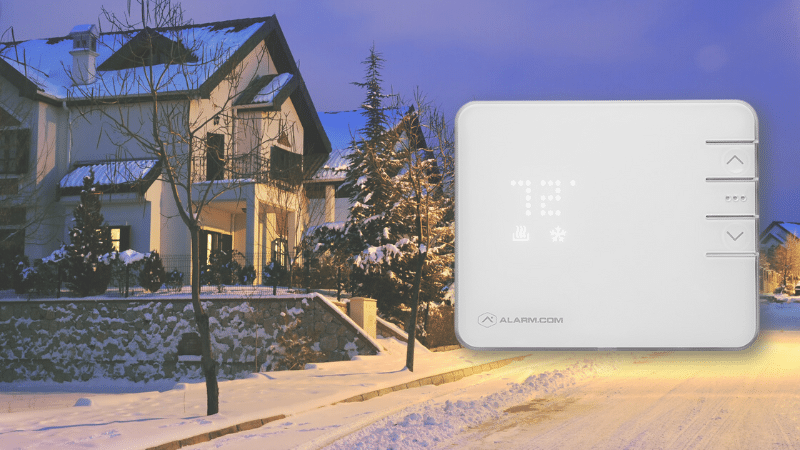
    image of a thermostat over a snowy street

    Another benefit of low temperature monitoring is energy efficiency. By monitoring the temperature in your home or business and making sure it stays within a safe range, you can help reduce your energy usage and lower your energy bills. This is especially important for businesses, as energy costs can make up a significant portion of operating expenses. 

    Low temperature monitoring not only provides safety and comfort in your home or business, but it can also save you money in the long run. By monitoring and maintaining a safe temperature range, you can reduce the risk of costly repairs due to frozen and burst pipes, as well as lower your energy bills through improved energy efficiency. Investing in a low temperature monitoring system can provide peace of mind and cost savings, making it a smart and valuable addition to your home or business. You can learn more about our energy management features here.

  • Advanced Protection Logic

    Advanced Protection Logic

    Advanced Protection Logic

    Security ONE’s Advanced Protection Logic protects our smart
    security systems from burglars who try to destroy the panel before the siren
    even sounds. Most security systems are programmed to have an entry delay to allow
    you time to arm and disarm your system. This APL technology sends a silent
    alarm to our ULC listed, 5 Diamond certified monitoring station.

    What’s more, a wireless security system protects you against criminals that would try to defeat a security system by cutting the wires with a $2 pair of wire cutters.

    APL works like this – when the first contact is tripped, a signal is sent to monitoring station. Either an alarm or a successful disarm will follow. If neither is received by the time the entry delay is has lapsed, the silent alarm is sent, and the authorities are dispatched.

    In Windsor, ON

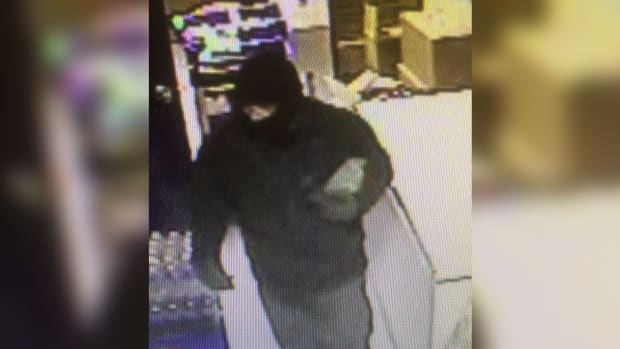
    It was a Saturday night in July when an intruder brock into
    a local convenience store in Windsor. The burglar heard the constant beeping of
    the system’s entry delay and immediately ran over to smash the system. Even by
    smashing the keypad, the criminal did not defeat the security system. The
    silent alarm had been sent to the monitoring station and the police were
    dispatched immediately.

    Let our security experts custom design a security solution fit
    for your specific application. With our 24-hour monitoring, we’re an extra set
    of eyes and ears when you’re not there. Call us today at 1-800-265-5317 or just
    CLICK HERE!

  • Back To School Safety

    Back To School Safety

    Get Prepared for Back to School Safety!

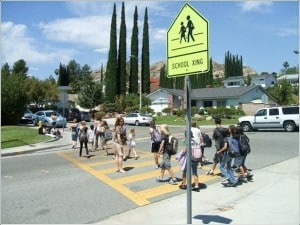
    Parents everywhere are already starting to exclaim… It’s
    back to school time!

    As schools and classrooms get prepared for the students, you
    should expect traffic to get a little heavier on our streets. Summer holidays
    are all but over and school buses are returning to their regular routes.

    These safety tips will help keep everyone safe.

    1) Observe School Safety Zones

    It’s very easy for children to get distracted crossing the
    road on their way to and from school. Slowing down and being vigilant is important
    to keeping kids safe. Children are excited to their friends and may not be
    thinking about the rules of the roads.

    2) Obey the Crossing Guard

    Crossing guards are usually volunteers and are there to keep
    children safe. Even if the traffic lights change, you should always follow the crossing
    guard’s direction and not the traffic light. There might be a child still
    crossing the street that you can’t see.

    3) Watch for Darting Children

    Kids are small and can become easily distracted, and for
    drivers, this can create dangerous situations on the roads. Be mindful and
    alert behind the wheel. You never know when a small child might step out from
    between parked cars or off a sidewalk. Your quick reflexes might be needed to
    prevent an accident.

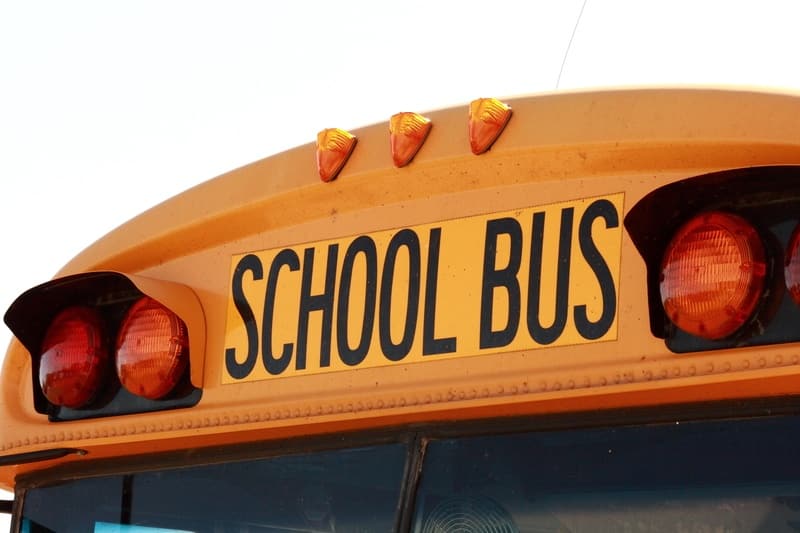
    4) School Buses

    Most accidents take place outside the bus. Make sure
    children get to the bus stop too early where they can wander or get into
    mischief. Make sure children wait well back from the road and stay back until
    the school bus makes a full stop and the doors open. Explain that they must
    walk at least three metres (10 feet) away when crossing in front of the bus so
    the driver can see them. When driving your car near a school bus please note
    that extra caution is always needed. Never pass a school bus when the lights
    are flashing.

    Looking for a great way to not just tell when your children are home, but to SEE when they are home? Our Smart IP cameras can be viewed from your smart phone, tablet or PC. Just CLICK HERE!

  • Summer Vacation Tips

    7 Summer Security Tips To Keep You Safe

    1. Locked windows & doors before you leave. We know it sounds simple but its shocking how many people forget to lock the door. Police say 30% of break-ins occur through an unlocked door
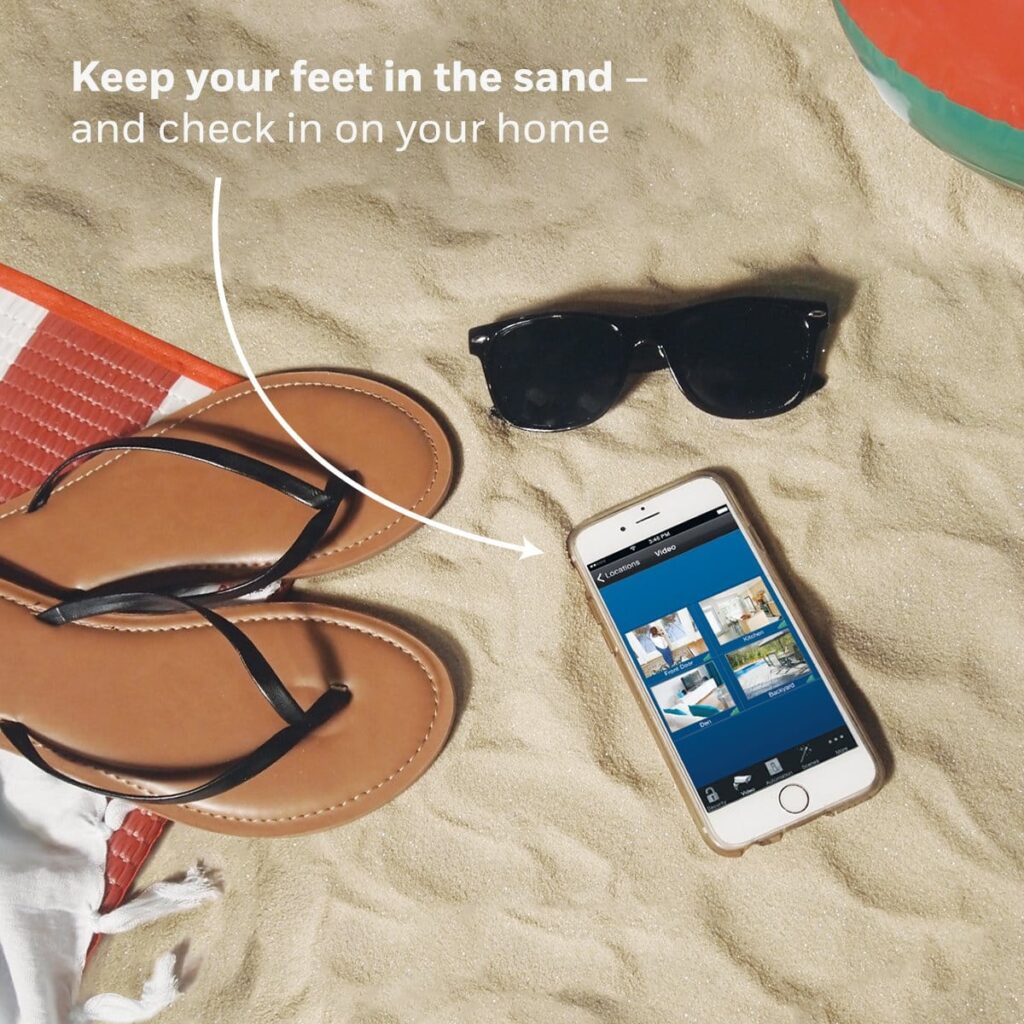
    2. Don’t forget to set the alarm. With our Remote-control app, you can check if your system is armed or disarmed from your phone or tablet.
    3. Get someone to park in your driveway while you’re away. A car in driveway is an obvious sign that somebody is likely at home making it less appealing to a criminal.
    4. Stop your mail service or have a neighbor pick up your mail. Junk mail overflowing from a mailbox is a sure sign that nobody is home.
    5. Find a house sitter. Having someone come over to open and close curtains, turn on and of lights each day helps create the appearance of someone always being home. And they can water your pants too!
    6. Leave a few lights on. When all the lights are off the entire time, its another obvious sign that nobody is home. A smart home security system will do this for you by setting scenes automatically.
    7. Don’t post your vacation on social media until you return. Criminals are turning to social media more and more to see when people are away on vacation.

    Following these simple tips will help secure your home whether
    you are gone for the afternoon, the weekend, or a few weeks.

    To add a remote control app that arms and disarms your
    system and controls the lights, and deadbolts, call 1-800-265-5317 or just CLICK HERE!

  • Security Quiz

    Take this short quiz to see where your security knowledge
    stacks up!

    True or False? Most Home Invasions Happen at night?

    False. Movies and TV sometimes make it seem like burglaries only happen at night, with criminals hiding in the bushes. In fact, most break-ins happen between 9 AM and 3 PM.

    True or False? Most Homes Are Difficult to Get In Without
    Keys.

    False. Unfortunately, this is not at all true. On average,
    it takes a career criminal less than a minute to get into a home.

    True or False? Break-ins are Not Common.

    False. Home break-ins are very common happening every 15
    seconds somewhere in the North America.

    True or False. Criminals Look For Big Expensive Items.

    False. Smash & Grab Criminals look for items that are easy to grab and easy to re-sell such as jewelry, laptops, tablets, and smartphones.

    True or False? Criminals are not Usually Bold Enough to
    Break in through the Front of a Home.

    True. Criminals look for access with the least resistance. An
    open window visible from the street is the most common point of entry for
    break-ins.

    True or False? Burglars Don’t Have Time to Check for
    Unlocked Doors and Windows.

    False. Believe it or not, 30% of home invasions occur
    through an unlocked front door or window. So, while it may be easy to say you
    rely on your neighbors to hear breaking glass, it usually not the case.

    Aren’t Commercial Properties More Susceptible to Crime?

    False. While some commercial businesses may be more susceptible to some types crimes, such as shoplifting, home invasions of residential properties account for over 73% of all burglary offences.

    To schedule a free no obligation security evaluation, call 1-800-265-5317.

  • Spring Safety

    Spring Safety

    Spring Into Saftey With These Simple Tips!

    Is your home ready for spring? It’s an exciting time of year, but it’s also a time to get things done.

    While spring cleaning is common, there are actually a few other things you should do to keep your home safe as the seasons’ change.
    These simple tips can help eliminate any worries your home is ready for spring weather.

    1. Start with the roof.
    The winter season can be tough on any roof. If you had a little snow than normal, that can do even more damage. As the weather begins to improve, check your roof for missing or broken shingles and have them replaced.
    2. Clean eaves troughs and spouts
    Clogged eavestroughs and spouts can lead to water damage. Have the eaves cleaned out and make sure the pouts are free of any debris and pointed in the right direction. Remember, you want the water to flow away from your home.
    3. Secure your home’s entrances
    Spring is a great time to re-evaluate your home security. Check all the entrances to your home and make sure they’re secure.
    Check your windows to make sure the screens are still intact and that the locks work well.
    Install outdoor security cameras and motion sensor lights near your doors, especially back entrances that aren’t as visible to the public.
    Swap out old garage door codes for new ones.
    Talk to your security consultant about alternate communication for your security system than a traditional phone line.
    4. Check ground level windows
    As the weather warms up and your family spends more time outside, you’ll want to make sure your yard is safe for kids and pets. Keep them out of window wells or crawl spaces (for example, the space underneath a porch) with a simple, sturdy covering.
    5. Check your fence for winter storm damage
    The winter elements can also be tough on fences. Whether your fence in wood or chain, look for gaps or bends and check the gates and locks to make sure they are still secure.

    One last tip – A well-maintained yard not only shows pride of ownership but is a good indicator to would-be thieves that someone is home and takes there security and safety seriously.

    We can help. Schedule a free, no obligation security evaluation today! Call 1-800-265-5317 or CLICK HERE.!